
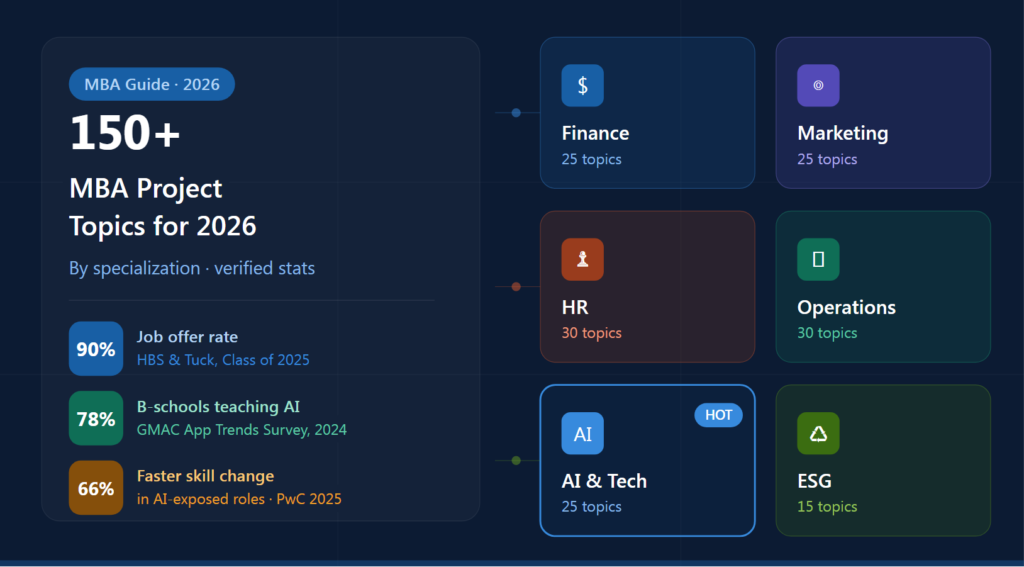
Browse 150+ MBA project topics for 2026 across Finance, Marketing, HR, Operations & Analytics. Free specialization-wise list with research-ready ideas.
MBA Project Guide helps mba students to research and find best topics for their project.
Top MBA Project Topics in Finance for 2026
Corporate Finance & Valuation
- Project Report on Impact of AI-driven financial forecasting on enterprise valuation accuracy
- Project Report on discounted cash flow models: methodology and market implications
- Project Report on Private equity deployment strategies in elevated interest-rate environments
- Project Report on SPAC performance analysis post-2021 boom: investor outcomes comparison
- Project Report on Corporate treasury management frameworks for cryptocurrency exposure
Investment Banking & Markets
- Project Report on Algorithmic trading effectiveness across emerging market equities
- Project Report on Green bond pricing mechanisms and institutional investor demand drivers
- Merger arbitrage opportunities in cross-border technology acquisitions
- Central bank digital currency impact on foreign exchange volatility
- Project Report on Retail investor behavior in high-volatility episodes: a behavioral finance perspective
Risk Management
- Project Report onClimate risk integration in commercial lending credit scoring models
- Project Report on Cybersecurity risk quantification frameworks for financial institutions
- Project Report on Liquidity stress testing methodologies under Basel IV implementation
- Operational resilience frameworks for distributed financial services
- Project Report on Cryptocurrency custody risk assessment and institutional adoption barriers
Fintech & Digital Banking
- Embedded finance adoption patterns in e-commerce platforms
- Project Report on DeFi protocol risk frameworks for institutional investors
- Digital wallet competitive dynamics in South and Southeast Asian markets
- Open banking API implementation: competitive advantages and regulatory challenges
- Robo-advisor transparency and client trust: a behavioral study
Wealth Management
- Alternative investment allocation for high-net-worth millennial clients
- Project Report on Tax-loss harvesting automation: effectiveness and adoption barriers
- Project Report on Sustainable investing preference drivers among Gen Z investors
- Family office digital transformation: technology adoption and governance
- Cryptocurrency portfolio allocation optimization: risk-adjusted return models
Trending MBA Project Topics in Marketing for 2026
Marketing has transformed faster than perhaps any other MBA specialization. AI content generation, privacy-first data strategies, and omnichannel personalization have created entirely new research territories.
Verified AI adoption context: The GMAC 2024 Application Trends Survey — covering more than 1,000 programs across approximately 300 business schools in 40 countries — found that 78% of business schools have integrated AI into their curriculum or learning experience, with only 22% yet to do so (GMAC 2024 Application Trends Survey, December 2024). Separately, approximately 40% of prospective MBA students now name AI as an essential element of their ideal curriculum (same source). Marketing is one of the primary application areas for AI in business education.
What makes a marketing project stand out in 2026 is not identifying a trend, but demonstrating measurable business impact. Projects that include A/B testing results, customer survey data, or campaign performance analysis are far more valued by recruiters than theoretical frameworks. Even a small primary study — specific numbers that didn’t exist before you ran it — moves a project from descriptive to analytical.
Digital Marketing & Analytics
- First-party data collection strategies in post-cookie advertising ecosystems
- AI-generated content effectiveness across B2B marketing channels
- Influencer marketing ROI measurement frameworks for direct-to-consumer brands
- Programmatic advertising efficiency in privacy-compliant environments
- Marketing mix modeling accuracy improvements through machine learning
Brand Strategy & Consumer Behavior
- Gen Z brand loyalty drivers in sustainable fashion markets
- Corporate activism impact on brand equity and consumer purchase intent
- Nostalgia marketing effectiveness across generational cohorts
- Brand community engagement in decentralized social platforms
- Celebrity brand partnership authenticity and sales conversion impact
Content Marketing & SEO
- Generative AI impact on organic search rankings and content marketing ROI
- Video-first content strategy effectiveness for B2B SaaS companies
- Podcast advertising attribution modeling and conversion tracking
- User-generated content integration in omnichannel brand strategies
- AI search engine optimization: ranking factors in ChatGPT and Perplexity results
Customer Experience & Personalization
- Hyper-personalization privacy tradeoffs and consumer acceptance thresholds
- Chatbot effectiveness in luxury retail customer service scenarios
- Augmented reality “try before you buy” conversion impact analysis
- Subscription fatigue patterns and retention strategy effectiveness
- Omnichannel customer journey orchestration: technology stack evaluation
Social Media & Community Marketing
- TikTok algorithm changes and organic reach optimization strategies
- LinkedIn B2B demand generation effectiveness versus paid channels
- Social commerce conversion patterns in Gen Z demographic segments
- Community-led growth strategies: measurement and ROI frameworks
- Brand crisis management response effectiveness across platforms
Best Human Resources MBA Project Topics for 2026
Talent Acquisition & Recruitment
- AI-powered resume screening: bias detection and mitigation strategies
- Remote-first hiring effectiveness and cultural fit assessment methods
- Skills-based hiring versus degree requirements: organizational performance outcomes
- Candidate experience optimization through recruitment marketing automation
- Diversity recruiting pipeline development: measurement frameworks and ROI
Employee Engagement & Retention
- Hybrid work model impact on employee engagement scores across industries
- Four-day workweek implementation: productivity and retention outcome analysis
- Employee burnout early-warning models using people analytics data
- Internal mobility program effectiveness in reducing voluntary turnover
- Generational differences in workplace benefit preferences and utilization
Learning & Development
- Microlearning platform effectiveness for technical skills development
- Leadership development program ROI measurement methodologies
- Peer-to-peer learning community impact on knowledge transfer rates
- AI-powered personalized learning path effectiveness versus structured training
- Upskilling investment correlation with long-term employee retention
Performance Management
- Continuous feedback systems versus annual review: employee performance outcomes
- OKR implementation challenges and success factors in matrix organizations
- Manager quality impact on team performance and voluntary turnover
- Performance calibration process fairness across demographic groups
- Skills assessment integration in appraisal and promotion frameworks
Compensation & Benefits
- Pay transparency policy impact on employee satisfaction and retention
- Equity compensation understanding and perceived value among non-executive employees
- Total rewards communication strategy effectiveness measurement
- Market-based versus tenure-based pay: retention and equity impact analysis
- Benefits personalization and employee engagement: adoption pattern study
Diversity, Equity & Inclusion
- DEI initiative ROI measurement frameworks: business case development
- Inclusive leadership training: behavioral change tracking post-intervention
- Employee resource group impact on belonging scores and retention rates
- Intersectionality in diversity recruiting and promotion practices
- Pay equity audit methodologies and remediation strategy effectiveness
Operations Management MBA Project Topics With the Most Value
Operations Management has become increasingly technology-driven, with supply chain resilience, process automation, and sustainability rising as critical themes. The MIT Sloan MBA Class of 2024 Employment Report shows Operations/Supply Chain as the fourth-largest MBA hiring function, with consulting, finance, and technology management leading (MIT Sloan, 2024).
Verified productivity context: Industries most exposed to AI saw productivity growth of 27% from 2018–2024 — nearly quadruple the 7% rate achieved by the same industries from 2018–2022 — based on PwC’s analysis of thousands of company financial reports (PwC 2025 Global AI Jobs Barometer, June 2025). Operations projects that quantify AI’s contribution to process efficiency or supply chain resilience are directly documenting this trend at the firm level.
Supply Chain Management
- Supply chain resilience measurement frameworks for global manufacturers
- Nearshoring versus offshoring cost-benefit analysis under 2024–2026 conditions
- Blockchain implementation for supply chain traceability: adoption barriers
- Last-mile delivery optimization using AI route planning algorithms
- Supplier relationship management digitization and procurement efficiency
Process Improvement & Lean Management
- Robotic process automation ROI in back-office operations across industries
- Lean Six Sigma implementation success factors in service organizations
- Process mining technology for bottleneck identification and reduction
- Agile methodology adaptation for operational excellence initiatives
- Digital twin simulation for manufacturing process optimization
Quality Management
- Predictive quality analytics using machine learning in manufacturing
- Customer quality perception measurement in service industries
- Root cause analysis automation through natural language processing
- Quality management system digital transformation: implementation best practices
- Zero-defect manufacturing feasibility in high-mix, low-volume production
Inventory & Logistics
- Demand forecasting accuracy improvements through machine learning
- Just-in-time inventory viability in volatile supply chain environments
- Warehouse automation ROI: realistic analysis and implementation timelines
- Circular economy principles in inventory and returns management
- Cross-docking effectiveness for reducing inventory holding costs
Sustainability in Operations
- Carbon footprint reduction strategies in logistics and transportation
- Circular supply chain design for consumer electronics manufacturers
- Sustainable packaging material adoption: barriers and cost-benefit analysis
- Reverse logistics optimization for product take-back programs
- Energy efficiency gains through smart manufacturing technologies
Operations Strategy
- Manufacturing reshoring decision frameworks for US and EU companies
- Service operations digital transformation readiness assessment
- Capacity planning under demand uncertainty: scenario planning approaches
- Make-versus-buy decisions in technology-intensive supply chains
- Operations network design for omnichannel retail fulfillment
mba project topics
Artificial Intelligence & Technology Management
- Generative AI governance frameworks for enterprise implementation
- AI ethics policy development and deployment in financial services
- Large language model deployment strategies for customer service automation
- AI-human collaboration optimization in knowledge work environments
- Technology stack evaluation for AI-powered product development
Sustainability & ESG Management
- Corporate carbon accounting methodology: standardization challenges and solutions
- ESG data quality assessment and third-party verification frameworks
- Sustainable finance product development and institutional demand analysis
- Climate scenario analysis integration in corporate strategic planning
- Biodiversity impact measurement frameworks for corporate sustainability reporting
Healthcare Management
- Project report on Telehealth adoption barriers and patient satisfaction drivers post-COVID
- Healthcare AI diagnostic tool implementation and clinical workflow integration
- Value-based care reimbursement effectiveness across specialty areas
- Project report on Patient data privacy compliance in digital health platform deployment
- Healthcare supply chain optimization during crisis and disruption scenarios
Data Analytics & Business Intelligence
- Project report on Data governance framework implementation in decentralized organizations
- Self-service analytics platform adoption and user proficiency development
- Predictive analytics ROI measurement across business functions
- Project report on Data visualization effectiveness for executive decision-making quality
- Real-time analytics infrastructure for e-commerce personalization
Entrepreneurship & Innovation
- Project report on Corporate venture capital portfolio strategy and governance structures
- Innovation lab effectiveness measurement and internal ROI justification
- Business model innovation patterns in digital transformation contexts
- Startup valuation methodology for pre-revenue technology companies
- Project report on Entrepreneurial ecosystem development in emerging markets
Cross-Specialization Topics
- Climate risk integration in institutional investment policy frameworks
- Project report on Workforce automation impact on compensation structure and job architecture
- Embedded AI adoption in mid-market ERP systems: change management barriers
- Project report on Behavioral nudge effectiveness in retirement savings program design
- Gig economy platform regulation and worker classification: global comparison
- Digital health wearable data monetization: privacy, consent, and market models
- Urban mobility platform competition: pricing strategy and network effects
- Carbon credit market liquidity and corporate procurement strategies
- Platform business model transition for traditional B2B manufacturers
- Project report on AI-assisted legal contract analysis: adoption and accuracy in corporate law settings
- Sports analytics and athlete performance monetization in professional leagues
- Decentralized autonomous organization (DAO) governance structures and legal risks
- Quantum computing readiness assessment for financial services firms
- Cross-border digital trade compliance frameworks for e-commerce operators
- Social impact bond design and outcome measurement in public sector partnerships
How to Structure Your MBA Project for Maximum Impact
A well-structured project demonstrates rigor while staying accessible to non-specialist readers.
Executive Summary (1 page): Cover your research question, methodology, key findings, and business recommendations. Make it fully self-contained: a busy recruiter should understand your entire project’s value from this page alone. Include at least one quantitative finding — a percentage, a dollar figure, or a statistically significant result.
Introduction (3 pages max): Frame the business problem using real industry data. The verified statistics in this guide are examples of the kind of anchor data that makes an introduction land.
Literature Review: Organize findings thematically, not chronologically. Identify gaps or contradictions in existing research. The best literature reviews set up your own contribution by showing precisely what is not yet known.
Methodology: Explain your research design, data sources, and analytical methods in enough detail that someone could replicate your study. Include sample size justification and sampling methodology for any primary data.
Analysis and Findings: Don’t just describe what the data shows — interpret what it means for business practice. Connect each finding back to your research question. Tables and charts should do analytical work, not just illustrate.
Recommendations: Specify who should do what, by when, with what expected outcome. “Companies should consider” is not a recommendation.
Limitations and Future Research: Acknowledge what your study couldn’t address. This is a strength signal, not a weakness.
How long should an MBA project take to complete?
Most MBA programs allocate one semester (12–16 weeks) for capstone projects, though some intensive formats compress this to 6–8 weeks. Projects requiring primary data collection need 2–3 extra weeks for fieldwork and data cleaning before analysis begins. A realistic weekly commitment is 10–15 hours throughout the semester.
Can I change my MBA project topic after starting?
Topic changes after initial approval significantly compress your remaining timeline. If a change is necessary, act within the first two weeks after proposal feedback. Spending an extra week validating your topic before committing is almost always faster than pivoting mid-project.
Should my MBA project focus on my current industry or target industry?
Your target industry delivers more career value. Aligning your project with the sector you want to enter builds domain expertise, relevant networks, and signals career intentionality to recruiters. HEC Paris’s 2025 employment data found that 57% of their graduates switched sectors after their MBA (HEC Paris Employment Report 2025) — a project in the target sector makes that transition more credible.
How much primary data is necessary for a strong MBA project?
Practical minimums: 100+ survey responses for statistical credibility, 15–20 interviews for qualitative depth, or 3–5 company case studies for comparative analysis. Even a modest primary component dramatically strengthens a project versus literature-only work because it produces original findings that cannot be found anywhere else.
What is the ideal word count for an MBA capstone project?
Most business schools specify 50–80 pages excluding appendices, roughly 12,000–20,000 words. Concise, tightly argued projects with strong evidence consistently outperform padded ones in faculty evaluations. Write to answer the research question completely — not to reach a page count.
Conclusion
The data in this guide tells a consistent story across multiple independent primary sources.
From PwC’s CEO survey: 42% of CEOs are losing sleep over AI implementation pace — and only 12% have seen real returns. That gap is your research territory.
From PwC’s AI Jobs Barometer: Skills are changing 66% faster in AI-exposed roles, and workers with those skills earn a 56% wage premium. Finance, HR, and Operations projects that quantify this shift at the firm level are directly documenting a documented labor market transformation.
From GMAC and Robert Half: 76% of tech leaders have skills gaps they cannot fill. 78% of business schools now teach AI. The demand signal and the supply signal are pointing at the same problem.
From HBS and Tuck employment reports: 90% of job-seeking graduates at top programs receive offers within three months. Your project topic is one of the first differentiators recruiters examine. Make it specific to the problem employers are currently paying to fix.
The practical decision framework: identify one function where you want to work. Find the most recent GMAC, PwC, or McKinsey report that describes what companies in that function are paying to solve right now. Design a project that addresses that problem using data you can realistically access. Pick a faculty advisor with active industry connections in that area. Execute with primary data wherever possible.
The gap between an adequate project and an exceptional one is almost never the topic. It is the specificity of the research question, the quality of the data, and the actionability of the recommendations. A clear question with rigorous evidence outperforms a prestigious topic with generic analysis every time.
Your project is the first piece of evidence about how you work. Make the evidence specific.
Ready to Start Your MBA Project Journey?
Book a free consultation with our team today.
We’ll understand your requirements and show you
exactly how our mentorship can help you succeed.